
Monday to Saturday - 8:00 -17:30

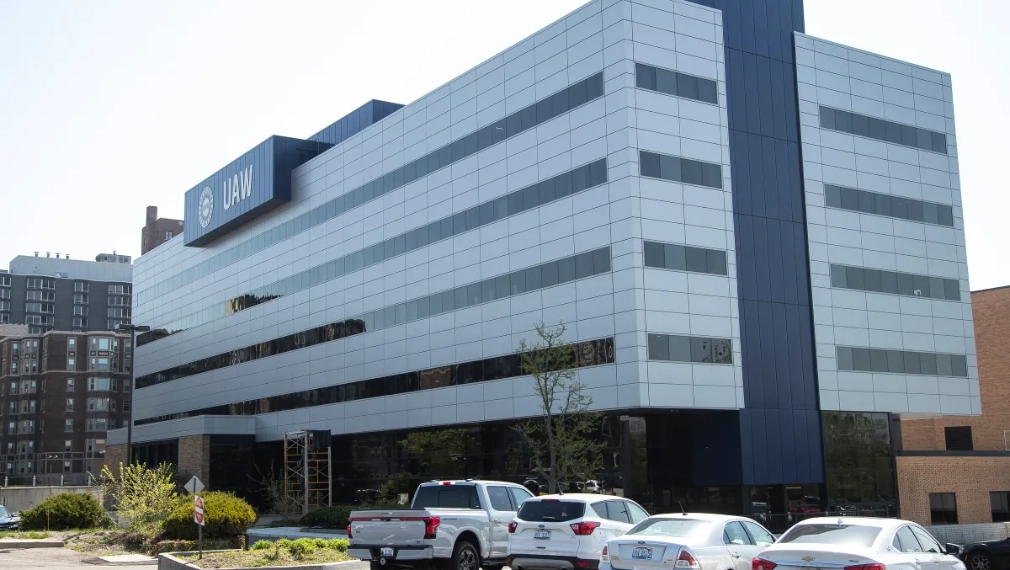
Key Information: UAW
Full Name: The International Union, United Automobile, Aerospace and Agricultural Implement Workers of America.
Formation: Founded in May 1935 in Detroit, Michigan, as part of the Congress of Industrial Organizations (CIO).
Type of Organization: A major North American industrial union.
Representation: Famous for representing workers in the auto industry (the “Big Three” – Ford, GM, Stellantis), but also has a large and growing membership in higher education (academic student employees, postdocs, faculty), healthcare, and the public sector.
Membership: It represents approximately 400,000 active members and over 580,000 retired members.
Core Mission: To improve and protect the wages, hours, and working conditions of its members through collective bargaining and to advocate for broader social and economic justice.
Founding History: Formed by auto workers during the Great Depression who sought to organize the entire auto industry on an industrial basis, rather than by individual craft.
First President: Homer Martin.
Current Leadership:
President: Shawn Fain
Secretary-Treasurer: Margaret Mock
Vice Presidents: Chuck Browning, Rich Boyer, Mike Booth
Primary Activities: Known for its “pattern bargaining” strategy with automakers, militant strike actions, a strong focus on political action, and a tradition of social unionism.
Headquarters: Detroit, Michigan.
An Introduction to the United Auto Workers (UAW)
The United Auto Workers (UAW) is a union born of the Great Depression, whose own history is very much bound up with the emergence of the American middle class and the ups and downs of the country’s manufacturing base. Perhaps most famous for its representation of the men and women who construct America’s automobiles and trucks, the UAW has been a key player in America’s labor movement for nearly a century. With an estimated 400,000 active members, its influence now extends far beyond the factory floor to have a large and growing presence in higher education, health care, and public service.
From the landmark Flint Sit-Down Strike that demonstrated its power to today’s “Stand-Up Strike” that reaffirmed its militant heritage, the UAW has a long tradition of standing up for economic and social justice. The UAW is defined by its aggressive collective bargaining, its deep penetration into politics, and its belief that its members’ struggle is one element of a greater struggle for a more equitable society. This article looks into the UAW’s storied past, its milestone victories, its impact on American industry, and its bold vision for the future.
The UAW's Impact on the Auto Industry and Beyond
Setting the Standard for American Manufacturing
For generations, UAW agreements with the “Big Three” Detroit automakers (General Motors, Ford, and Stellantis, formerly Chrysler) not only made auto workers wealthy but set wage and benefit patterns for the entire U.S. manufacturing sector. The ripple impact of that setting produced an increase in compensation for union and non-union employees and contributed to a robust middle class in the post-World War II era.
A New Force in Higher Education
Despite its roots in industry, one of the UAW’s most rapidly expanding fields is in the world of academe. The union has more than 100,000 academic employees, including graduate student employees, postdoctoral researchers, and faculty at universities across the country. Through campus unionization, the UAW applies its decades-long bargaining experience to fight for just rewards, enhanced benefits, and academic autonomy for tomorrow’s scholars and researchers, fundamentally reshaping the landscape of higher education.
How to Join or Support the UAW
Membership in a Diverse Union
Workers become part of the UAW when they organize their workplace and create a local union, or “Local.” While its largest membership remains in the auto, aerospace, and farm implement industries, the union is divided into numerous divisions. This includes a large Technical, Office, and Professional (TOP) department, which represents workers in non-conventional industries such as higher education, health care, and public service.
Organizing the Unorganized
An integral principle of the UAW is to extend the advantages of unionization to all employees. The union is currently actively engaged in ambitious organizing drives to organize the non-union, foreign-owned automotive plants that are primarily located in the American South. Employees considering the formation of a union can contact the UAW’s organizing department for help, training, and support.
Community Action and Support
The UAW Community Action Program (CAP) is the union’s non-partisan political and community organization affiliate. Members may become active through their local CAP council to organize voter registration drives, lobby for pro-worker legislation, and build coalitions with community allies to fight for shared goals.
Key Achievements and Landmark Contracts of the UAW
The ‘Treaty of Detroit’
In 1950, the UAW, under the great Walter Reuther, negotiated a historic five-year contract with General Motors known as the “Treaty of Detroit.” This agreement established a new standard for American labor. Not only did it include dramatic wage increases but also cost-of-living adjustments (COLA) to counteract inflation, employer-paid pensions, and full-scale health insurance—benefits that would become the foundation of middle-class economic security.
The 2023 ‘Stand-Up Strike’
The UAW, with its new reform-minded leadership under President Shawn Fain, in 2023 initiated an unprecedented and hugely successful “Stand-Up Strike” against all three large automakers simultaneously. Not a full walk-out, but rather a carefully planned series of individual locals to “stand up” and strike, the union kept the corporations off-balance. The plan was a big hit, winning historic settlements that restored concessions made over previous decades, ended wage tiers, secured gigantic pay increases, and won an opening to organize new electric vehicle (EV) battery plants.
Internal Reform
The UAW’s history has included a massive federal corruption scandal in which a number of its previous leaders were incarcerated. Nevertheless even that crisis had a profound and positive change. Under a federal consent decree, the union’s members voted to change to a new system of “one member, one vote” for its top leadership. This historic reform enabled the election of a fresh, more progressive slate of leaders and has ushered in a new age of openness and rank-and-file democracy.
Why the UAW is Beneficial for Students and Academic Workers
A Leader in Academic Organizing
While famous for its automotive manufacturing history, the UAW is now one of America’s largest and most influential unions for education employees. With over 100,000 members at institutions of higher education teaching faculty, the union comprises graduate student instructors, teaching assistants, postdoctoral researchers, and other academic staff at elite universities like the University of California, Harvard, and Columbia. For teachers employed in academia, the UAW provides a formidable collective voice.
Securing Landmark Contracts for Students
Through the process of organizing, student workers have secured landmark contracts that greatly improve their working and economic conditions. UAW contracts that the students won have instituted huge pay increases, bargained for full healthcare and dental benefits, achieved child subsidies, and enacted robust protections against workplace harassment and discrimination. This makes academic careers more sustainable and available to all students.
Advocacy for Higher Education
The UAW’s activism extends far beyond the campus walls. The union is a vocal voice in the broader fight for public higher education, advocating for increased state and federal funding of universities, fighting for student debt relief, and defending the principles of academic freedom. By unionizing student workers, the UAW makes sure that universities continue to be engines of opportunity and research.
The UAW's Founding and Historic Strikes
The Flint Sit-Down Strike: A Defining Victory
The UAW was won through one of the greatest strikes in US history. Autoworkers at General Motors’ plants in Flint, Michigan, from December 1936 to February 1937, struck in a “sit-down” strike against the largest corporation in the world. Instead of picketing the plants, the workers occupied the factories, shutting down production and preventing the company from bringing in replacement workers. After a dramatic 44-day confrontation that included police shootouts, the impressive solidarity and discipline of the workers forced GM to recognize the UAW. The victory created waves of union organizing across the United States and made the UAW an organization to be respected.
Core Activities and Bargaining Strategies of the UAW
Pattern Bargaining
The UAW is famous for using pattern bargaining. In a contract year, the union will deliberately select one of the Big Three automakers as its prime target. It will focus all its energies on negotiating the best contract possible with the single company. When the contract is signed, that contract becomes the “pattern.” The UAW then uses that pattern as the non-negotiable standard it demands the other two firms sign up to or exceed, leveraging solidarity to elevate standards across the whole industry.
Political Action (V-CAP)
The UAW knows that political action is required to protect its gains. The UAW Voluntary Community Action Program (V-CAP) political action committee is a political force to be encountered in America. The UAW enlists its members to support candidates who share the interests of working families and campaigns relentlessly on fair trade, job safety, and the right to organize.
| Core Objective / Activity | Description |
|---|---|
| Pattern Bargaining | A strategy of targeting one major employer to set a contract “pattern” that is then enforced across the rest of the industry. |
| Political Action (V-CAP) | Maintains a powerful political action committee to endorse candidates and lobby on issues like fair trade and workers’ rights. |
| Community Action Program (CAP) | The union’s grassroots political arm, which mobilizes members to engage in local, state, and national political and community issues. |
| Health and Safety Advocacy | Maintains a large department of experts who train members and bargain for strong health and safety protections in the workplace. |
| Organizing New Members | Commits significant resources to strategic organizing, with a current focus on non-union auto plants in the South and academic workers. |
| Social Unionism | Engages in broader fights for social justice, including civil rights, universal healthcare, and environmental protection. |
Why the UAW is Beneficial for Workers and Communities
Building Strong Communities
The high-paying, high-benefit jobs that UAW contracts produced were the bedrock of stable, healthy communities across the industrial Midwest for decades. Good jobs supported neighborhood shops and services, funded public schools, and generated a tax base that made entire cities prosperous.
A Tradition of Social Unionism
From its very inception, the UAW has been an adherent of “social unionism”—the belief that it is the responsibility of a union to extend its role beyond the factory walls. Under Walter Reuther’s leadership, the UAW was a key financial and organizational supporter of the Civil Rights Movement, contributing funds for the March on Washington and marching with Dr. Martin Luther King Jr. The union’s legacy continues today as it battles for universal health care, racial justice, and a healthy environment.
Conclusion: The Future of the UAW
Years of declining membership and a debilitating corruption scandal have reduced the United Auto Workers to ruin. But today, the union has been reborn with a new, democratic leadership and a revived fighting spirit. The historic triumph of the 2023 Stand-Up Strike has not only earned its members but has shaken to action workers across the country.
The future is full of challenges. The UAW must steer the gigantic transition to electric cars, ensuring that the future green jobs are good, union jobs as well. Its most ambitious goal is to organize the Southern non-union auto plants, a feat that would forever change the nation’s economic and political landscape. For the UAW, the fight which began in the factories of Flint continues under the firm conviction in solidarity and justice for all working men and women.