
Monday to Saturday - 8:00 -17:30

Key Information: IBT
-
Full Name: The International Brotherhood of Teamsters.
-
Formation: Founded in 1903 through the merger of two rival team driver unions in Niagara Falls, NY.
-
Type of Organization: A highly diverse and powerful labor union representing blue-collar and professional workers across North America.
-
Representation: Members work in virtually every industry, including trucking and logistics (its historic core), airlines, freight, warehousing, construction, law enforcement, and public services.
-
Membership: The union represents approximately 1.3 million active members and 500,000 retirees.
-
Core Mission: To organize and unite workers to build power, secure strong contracts with better wages and working conditions, and advocate for social and economic justice.
-
Founding History: Created to end vicious jurisdictional disputes between the Team Drivers International Union and the Teamsters National Union.
-
First President: Cornelius Shea.
-
Current Leadership:
-
General President: Sean M. O’Brien
-
General Secretary-Treasurer: Fred Zuckerman
-
-
Primary Activities: The union is known for its strong focus on collective bargaining (especially national master agreements), aggressive organizing of new workers, and powerful political action.
-
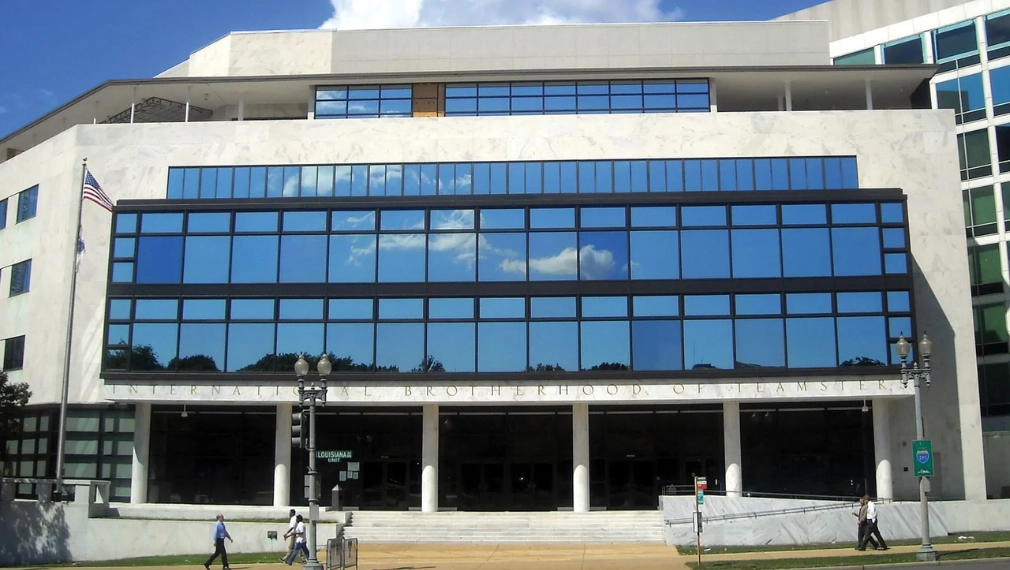
Headquarters: Washington, D.C.
An Introduction to the International Brotherhood of Teamsters (IBT)
The International Brotherhood of Teamsters is one of the most powerful, famous, and historically significant labor unions in North America. Born in an era of horse-drawn wagons, the Teamsters have grown into a modern-day giant with 1.3 million members in almost every conceivable industry. Although the union’s name is infamously associated with trucking and shipping, the membership of today is surprisingly diverse and includes everyone from airline pilots and warehousemen to police officers and government workers.
Known for its formidable bargaining power and militant history, the Teamsters have been a driving force in building and defending the American middle class for over a century. The union has a complex and storied past, marked by both monumental victories for working people and periods of controversy and reform. This article discusses the Teamsters’ important role in the US economy, its historical victories, its core values, and its vision going forward under new leadership generations.
The Teamsters' Impact on Transportation and Logistics
Standardizing the Trucking Industry
The Teamsters’ greatest impact has been on the North American freight industry. Under the mid-20th century leadership of Jimmy Hoffa, the union accomplished what had heretofore been considered impossible: the creation in 1964 of the National Master Freight Agreement (NMFA). The uniform, industry-wide contract standardized wages, benefits, and working conditions for hundreds of thousands of truck drivers across the country. It transformed trucking from a low-wage, irregular job into a stable, middle-class profession and gave the union immense economic power. While deregulation in the 1980s weakened the NMFA, it remains an iconic win in the history of labor.
Power Beyond the Road
The union’s influence extends well beyond trucking. The Teamsters Airline Division is a presence in the aviation industry, representing pilots, flight attendants, mechanics, and other ground workers at dozens of airlines. In the supply chain, Teamsters are essential to the movement of goods and work in logistics and warehousing for giants such as UPS. Being present at all of the points of leverage in the supply chain—from the port to the warehouse to the point of delivery—gives them a strategic power that is matched by few in the labor movement.
Key Achievements and Landmark Events of the Teamsters
The 1997 UPS Strike
One of the most significant labor victories of the late 20th century was the 1997 Teamsters strike against United Parcel Service (UPS). Nearly 200,000 Teamsters walked off the job for 15 days, crippling the logistics giant. On the table was the company’s increasing reliance on low-paid, part-time labor. Backed by overwhelming public support under the slogan of “Part-Time America Won’t Work,” the union made history, securing the creation of 10,000 new full-time positions and significant pay increases. The strike was a powerful demonstration of union strength and put the issue of precarious work on the national agenda.
A History of Reform
The Teamsters’ history has been famously marred by periods of corruption and ties to organized crime, particularly during the mid-20th century. This led to federal oversight and the expulsion of the union from the AFL-CIO in 1957. However, this history also sparked a powerful internal reform movement. Rank-and-file movements, most notably Teamsters for a Democratic Union (TDU), have fought for decades to bring democratic reforms, fight corruption, and make the union more accountable to the membership. Those struggles culminated in direct, one-member-one-vote elections for top leadership and a new era of more open and militant leadership.
Recent Contract Victories
Under new leadership from Sean O’Brien, the union has been more combative at the bargaining table. In 2023, the Teamsters won a record new contract for over 340,000 members at UPS, averting a strike and gaining huge victories, such as the elimination of a two-tier wage system, high wage hikes for all workers, and safety features like air conditioning in new trucks. This victory has energized the labor movement and set a new, high standard for contract negotiations.
How to Join or Support the Teamsters
Membership Through Local Unions
The Teamsters’ foundation is its network of hundreds of local unions, or “Locals.” The Teamsters gain new members by organizing their workplace and joining their area’s respective Local. Each Local has its own elected officers and exists to negotiate local contracts and represent members in a geographic region or trade segment.
Organizing the Unorganized
The Teamsters are also deeply invested in organizing new members, with major campaigns in some of the most significant sectors of the new economy. The union has devoted considerable resources to organizing workers at Amazon, as it believes that unionizing the logistics giant is crucial to the future of the industry and the labor movement itself. Workers who are interested in organizing a union can call the Teamsters’ organizing department for support and resources.
Political Action and Community Support
The Teamsters’ political action committee, DRIVE (Democrat, Republican, Independent Voter Education), is one of the country’s largest. DRIVE is funded by members who voluntarily contribute to the committee in order to elect pro-labor candidates and promote pro-labor legislation. Community allies can help the union by honoring picket lines, supporting union-called boycotts, and struggling for policies that promote workers’ rights.
The Teamsters' Founding and Early History
Joining the Drivers
The International Brotherhood of Teamsters was formed in Niagara Falls, New York, in 1903. It was the result of a merger between two rival unions of horse-drawn wagon drivers: the Team Drivers International Union and the Teamsters National Union. The two unions had been waging bitter and occasionally violent jurisdictional disputes, and the merger was an attempt to organize all “teamsters” under a single parent organization.
An Era of Growth and Militancy
The early decades of the union were years of quick growth and violent, often bloody, strikes. The union grew from a small craft union under the long-serving General President Daniel J. Tobin (1907-1952) into a political and financial giant. Tobin centralized the union’s structure and tied the union very closely to the Democratic Party, and the Teamsters became a powerful force in national politics.
Why the Teamsters are Beneficial for Workers and the Economy
Setting High Standards for Wages and Benefits is point
Good Teamster contracts have always had a positive ripple effect throughout the entire economy. By winning high wages, complete healthcare coverage, and defined-benefit pensions for their members at companies like UPS and in the freight industry, the union sets a high standard that non-union employers often have to match. This “union standard” improves the wages and benefits of all workers.
A Force for Workplace Safety
The Teamsters are a powerful voice for on-the-job safety, particularly in the dangerous transportation and warehousing industries. The union negotiates for proactive safety protections in its contracts and advocates for strong federal regulations through agencies like OSHA and the Department of Transportation.
Building Middle-Class Jobs
By transforming low-wage, precarious jobs into good-paying, high-quality employment, the Teamsters have opened the doors to the middle class for millions of families. A good Teamster contract provides the economic security that allows workers to buy homes, send their children to college, and retire with dignity.
Core Activities and Main Goals of the Teamsters
Forceful Collective Bargaining
The Teamsters’ number one priority is winning the best contracts possible for its members. The union is known for being tough and disciplined at the bargaining table, with the strong threat of strike action to support them. They are masters at negotiating for everything from wages and health care to grievance procedures and protection from automation.
Effective Political Action
The Teamsters understand that what is won at the bargaining table can be lost in the halls of government. The union is a political power at all levels through its DRIVE fund. It aggressively lobbies on issues like trade, pensions, and trucking regulations, and it mobilizes its sizable membership to get out the vote for candidates it has endorsed.
Strong Contract Enforcement
A contract is only as good as its enforcement. The Teamsters have a very organized network of trained shop stewards—rank-and-file members who are the first line of defense in the workplace. Stewards address grievances and ensure management is meeting the letter of the collective bargaining agreement on a daily basis.
| Core Objective / Activity | Description |
|---|---|
| Collective Bargaining | Negotiates industry-leading contracts, including powerful National Master Agreements, to set high standards for wages and benefits. |
| Political Action (DRIVE) | Maintains one of the largest and most powerful political action committees in the U.S. to support pro-worker candidates and legislation. |
| Organizing New Members | Commits major resources to strategic organizing campaigns in core industries, with a primary modern target being Amazon. |
| Contract Enforcement | Relies on a strong network of trained shop stewards to handle grievances and ensure management abides by the contract daily. |
| Member Education and Mobilization | Focuses on educating and mobilizing its rank-and-file members to build power for contract campaigns, strikes, and political action. |
| Strategic Research and Campaigns | Maintains a research department to analyze corporations and industries, developing strategic campaigns to pressure employers. |
Conclusion: The Future of the Teamsters
From horse-drawn wagons to drone delivery, the International Brotherhood of Teamsters has been a steady and constant force for working people. After decades of internal conflict, the union has re-emerged with a new leadership generation and a new focus on aggressive organizing and militant bargaining.
The future of the Teamsters is focused on the biggest questions of the 21st-century economy. Their militant push to organize Amazon is an audacious bid to place union presence at the heart of modern logistics. While they fight automation, the gig economy, and corporate consolidation, the Teamsters hold fast to their original ideal: that the men and women who move America deserve a strong voice, a good future, and a fair share of the prosperity they create.