
Monday to Saturday - 8:00 -17:30

Key Information: CWA
Full Name: Communications Workers of America.
Acronym: CWA
Formation: Founded in 1947, evolving from the National Federation of Telephone Workers (NFTW), which was established in 1938.
Type of Organization: A diverse union representing workers in the information, communications, and service industries.
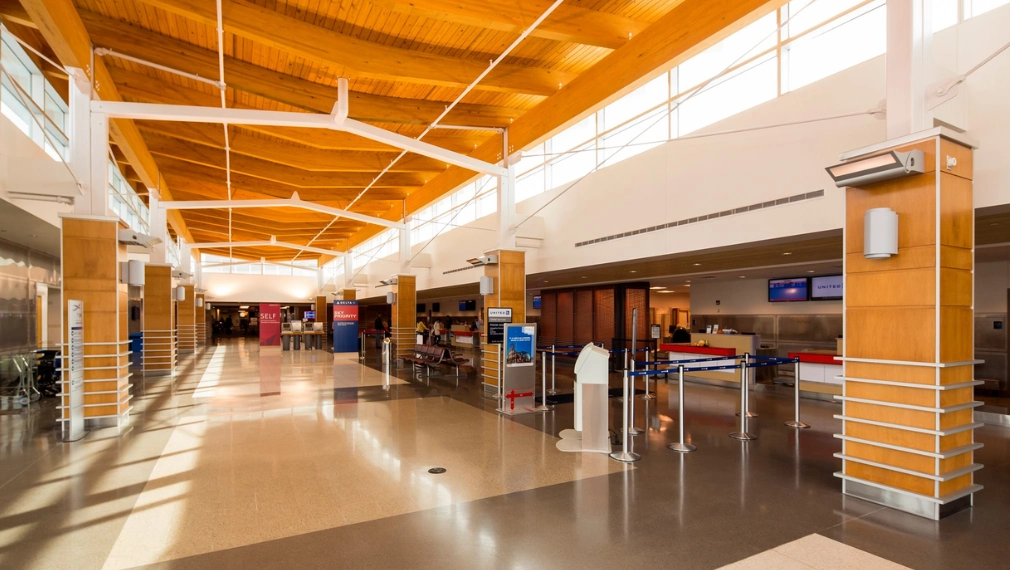
Representation: CWA’s 700,000 members work in telecommunications (AT&T, Verizon), media and journalism (The New York Times, NBC News), the airline industry (American Airlines, United), public service, healthcare, and the growing tech and video game sectors.
Core Mission: To unite workers for economic justice and democracy in the workplace and their communities, guided by the “CWA Triangle of Power”: strengthening collective bargaining, building power through organizing, and mobilizing for political and community action.
Founding History: Born out of a failed national telephone strike in 1947, which convinced members of the loosely-federated NFTW to create a single, powerful, centralized industrial union to effectively bargain with the Bell System monopoly.
First President: Joseph A. Beirne.
Current Leadership:
President: Claude Cummings Jr.
Primary Activities: The union is known for its large-scale bargaining in telecommunications, high-profile organizing in media and tech, and robust political and legislative mobilization.
Headquarters: Washington, D.C.
An Introduction to the Communications Workers of America (CWA)
The Communications Workers of America (CWA) is the information age union. From telephone operators who connected our nation to reporters who cover it and software developers who build our virtual one, CWA has come to represent the workers at the very foundation of our modern economy. With 700,000 members, the union has a powerful presence in telecommunications, media, airlines, public service, and the burgeoning tech and video game industries.
CWA is a politically engaged and progressive union based on a clearly articulated philosophy referred to as the “Triangle of Power.” This model integrates collective bargaining, political action, and organizing into three sides of the same struggle for workers’ rights that are mutually necessary and interrelated. From the Congress to the picket line, CWA is a passionate advocate of economic justice and a real voice of democracy in the workplace. This piece explores CWA’s history, pioneering approaches, landmark wins, and crucial role in mapping the future of work.
The CWA's Impact on Telecom, Media, and Tech
Setting the Benchmark in Telecommunications
For much of the 20th century, CWA was the dominant union of workers at the Bell System, the AT&T telephone monopoly. Through national bargaining, the union won high-quality wages, benefits, and job security that made telephone work a secure, middle-class job. Today, in the post-monopoly era, CWA is still the best voice for employees at giant phone companies like AT&T and Verizon, fighting for good jobs and quality service in the age of broadband and wireless.
A Champion for Journalism and Media
Through its largest Local, The NewsGuild-CWA, the union is a strong advocate for press freedom and journalism. The NewsGuild is the voice for thousands of journalists, editors, and other newsroom staff at great newspapers like The New York Times, The Wall Street Journal, and Reuters. In an era of media consolidation and attacks on the press, The NewsGuild-CWA fights for fair compensation, a dedication to journalistic values, and investment necessary to keep strong local news.
Planning the Digital Future
CWA has made a groundbreaking commitment to organizing the predominantly non-union video game and high-tech industries. In its CODE-CWA (Campaign to Organize Digital Employees) initiative, the union is speaking out on behalf of employees fighting “crunch culture,” poverty wages, and precarious contract employment. CWA’s success in organizing the first unions ever at major video game corporations (Microsoft’s ZeniMax) and Apple retail stores is a giant step forward for the emerging labor movement.
Key Achievements and Landmark Strikes of the CWA
The 1983 Bell System Strike
The night of the court-ordered dissolution of the AT&T monopoly, CWA coordinated a colossal, 22-day national strike by almost 700,000 employees. The strike was an enormous success, gaining substantial pay raises, job protection, and employee retraining funds for those with an uncertain future. It was a vivid demonstration of the union’s strength and its ability to organize even amidst gargantuan corporate restructuring.
Pioneering Airline Organizing
Following the deregulation of the airlines, hundreds of thousands of passenger service agents were left without a union voice and low wages. CWA initiated large-scale organizing efforts that were able to unionize vast majorities of these workers at carriers such as American Airlines and United, bringing the security of a union contract to a essential but frequently unsung airport workforce.
Victories in the Culture Wars
CWA members have headed up historic political and social causes. When Wisconsin Gov. Scott Walker started to strip collective bargaining rights from public employees in 2011, CWA members were at the forefront of the huge protests that occupied the state capitol building in Madison and drew national attention to the fight for workers’ rights.
How to Join or Support the CWA
Membership via Local Unions
The UFCW exists as a network of local unions across the country. Employees join the UFCW by organizing their workplace with the help of a local union or the international’s organizing department. The union provides resources, training, and strategic support to help employees in grocery, retail, food processing, and other industries secure a collective voice on the job.
The Active Ballot Club (ABC)
The UFCW’s political action committee, the Active Ballot Club (ABC), ranks as one of the largest and most involved in the nation. Members may donate on a voluntary basis to the ABC fund, which the union uses to fund pro-worker legislators and fight for legislation that advances working families, such as increases in the minimum wage and increased workplace safety legislation.
Consumer Support and Solidarity
Among the best ways to stand with the UFCW is to shop at union grocery stores. Spending their money at a store where workers have a union voice and are treated with respect, consumers are directly supporting good jobs in their communities. Standing by workers when they negotiate their contracts or go on strike is another crucial expression of public solidarity.
The CWA's Founding: Uniting the Telephone Workers
From Loose Federation.
CWA traces its ancestry to the National Federation of Telephone Workers (NFTW), formed in 1938. NFTW was not a single union but rather a loose federation of independent, local telephone worker unions. The form of this setup had one critical flaw: each of the local unions existed separately, which prevented them from uniting to exert collective force against the solitary Bell System monopoly.
Towards a Powerful National Union
This weakness was fatally exposed in the course of a national phone strike in 1947. The corporation was able to divide the unions locally and use them against each other, and the strike collapsed. Learning a hard lesson, the membership of the NFTW in the latter part of the year voted to dissolve their federation and establish a single, unified, centralized industrial union: the Communications Workers of America. With President Joseph Beirne at the helm, the newly consolidated CWA could now bargain with the Bell System as one entity.
Why the CWA is Beneficial for Tech, Media, and Student Workers
Fighting for a Voice in Tech
For game and tech industry workers, a CWA union contract is a tool to battle such company-wide problems as rampant “crunch” time, arbitrary lay-offs, and lack of creative input. It is a tool for workers to have a say over the products they make and under what conditions they make them in a democratic way.
Protecting Journalistic Integrity
For journalists and media workers in The NewsGuild-CWA, a collective bargaining agreement is a necessary safeguard of journalistic integrity. Provisions in the contract can protect reporters from being forced to reveal their sources and provide a firewall separating the business and editorial sides of a newspaper so that journalists can report the news without fear or favor.
Empowering Student Workers
CWA represents thousands of graduate student workers at universities and colleges, who are resisting in order to gain higher pay, health care coverage, and a halt to harassment. By providing these student workers with union power, CWA is making careers in academia more equitable and sustainable.
Core Activities and the "Triangle of Power" in the CWA
The CWA Triangle of Power
The union’s core strategy is the “Triangle of Power.” This philosophy holds that to succeed, a union must build and use power in three interconnected ways:
Collective Bargaining: Winning strong contracts at the bargaining table.
Organizing: Constantly building member power by organizing new workers.
Political & Community Action: Mobilizing members and allies to fight in the legislative arena and in the streets. CWA believes that a weakness in any one of these areas weakens the other two, and that true strength comes from integrating all three.
Legislative and Political Mobilization
CWA has an extremely energetic political and legislative agenda. The union gets its members to elect representatives who will fight on behalf of working families and lobbies for a host of issues, ranging from protecting the right to organize to advocating rules that support fair competition and universal access to broadband.
| Core Objective / Strategy | Description |
|---|---|
| The “Triangle of Power” | The core philosophy of integrating collective bargaining, organizing, and political action to build maximum worker power. |
| Political Action & Lobbying | Runs a powerful legislative and political program to support pro-worker candidates and advocate for key regulatory and policy goals. |
| The CODE-CWA Initiative | A dedicated campaign to provide resources and support for workers organizing in the largely non-union tech and video game industries. |
| Strategic Industry Bargaining | Conducts large-scale bargaining with major corporations in its core sectors, such as telecommunications and the airline industry. |
| The NewsGuild Sector | Operates a major sector exclusively focused on the needs of journalists and media workers, from bargaining to defending press freedom. |
| Next Generation Program | An internal initiative to train, mentor, and empower members 35 and under to take on leadership roles and guide the union’s future. |
Conclusion: The Future of the CWA
The Communications Workers of America has flourished to be more than a union of phone workers but an energetic union for the whole information economy. It has grasped the challenges of organizing workers in some of the most rapidly evolving industries, from media and telecommunication to airlines and tech.
The future of CWA is at the forefront of the new economy. The union is leading the battle to organize a voice in the video game and technology industries, to preserve local journalism, and to make sure jobs created by emerging technology are good, family-sustaining jobs. By being true to its “Triangle of Power” vision, CWA is prepared to fight for justice and democracy for the next generation of workers.